Blog
Blog
 20-21 May
  Brabanthallen 's-Hertogenbosch
The protein transition, rising energy costs, and labor shortages are turning up the pressure in the food processing industry.
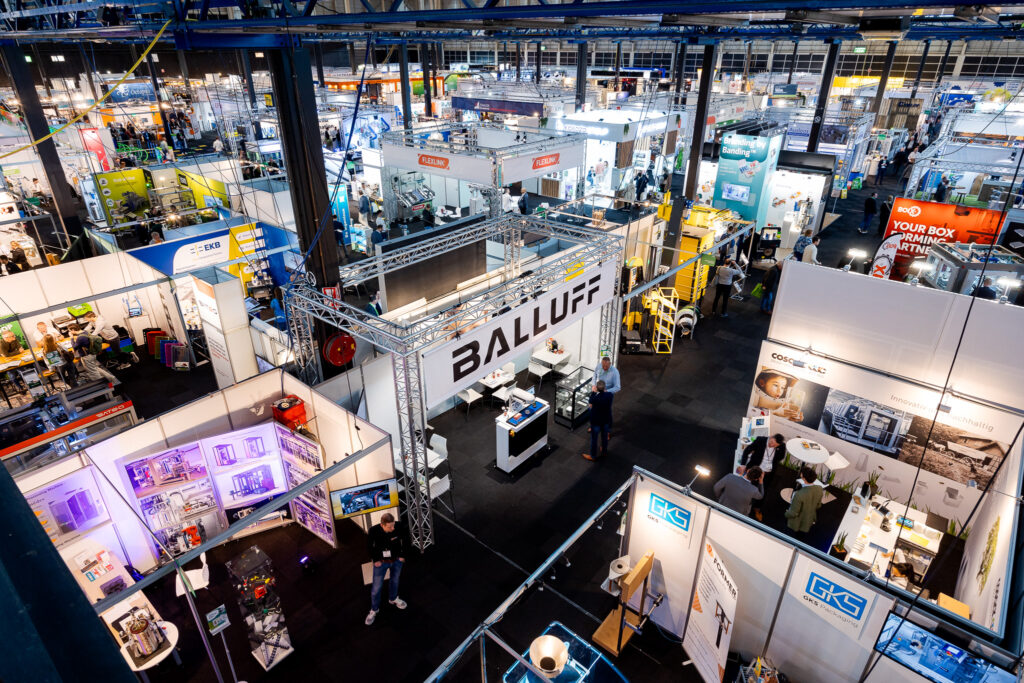
Food Tech Event in ‘s-Hertogenbosch is days away. The floor will be full of innovation: smarter conveyors, leaner processing lines, and automation built to close the gap left by a shrinking labor pool. The Dutch food industry, EU’s second-largest food exporter, will show up ready to solve hard problems.
But there’s one problem that rarely gets a stand—the software running behind all those smart machines. It’s exactly the kind of gap no-code food processing software is beginning to solve quietly, but decisively.
Three forces that demand flexible operations
The Dutch and EU food processing industry is navigating a perfect storm, and each element of it demands the same thing from operations: the ability to change quickly.
Energy costs. After surging 80% in 2022, energy remains one of the most volatile line items in a food processor’s budget. Companies are rerouting processes, adopting heat recovery systems, and rethinking production scheduling to reduce peak consumption. Every one of those changes touches operational workflows. If your software can’t adapt alongside them, the optimization stalls on the floor.
Labor shortages. Finding and retaining skilled production staff remains one of the most persistent challenges in the industry. Automation is the obvious answer, but automation without adaptable software creates a different problem: rigid systems that can’t accommodate new equipment, new roles, or new processes without months of vendor involvement and implementation costs.
The protein transition. Perhaps the most structurally disruptive shift of all. Food processors across the Netherlands are adding plant-based lines, reformulating existing products, and exploring hybrid ingredients often simultaneously. Each transition brings new production parameters, quality control requirements, and regulatory considerations.
What these three forces have in common: they reward agility. And agility, at an operational level, starts with software that doesn’t resist it.
The ERP problem nobody talks about
Ask any operations manager in food processing about their ERP and you’ll usually get a version of the same story. The system works, until something changes. And then it becomes the bottleneck.
Changing a workflow means a change request. A change request means a timeline. A timeline means a consultant. A consultant means a budget conversation. By the time the system reflects the new reality, the operation has already moved on and improvised its way around the software in the meantime—often relying on manual workarounds instead of proper food processing workflow automation.
This isn’t a failure of any specific vendor. It’s a structural mismatch. Enterprise ERP systems were built for standardization, for bringing large, complex organizations into a predictable, auditable order. That was the right solution for a different era.
But the food processing industry in 2026 doesn’t need more standardization. It needs more responsiveness. That’s why more teams are starting to explore no-code food processing software as a way to adapt processes without waiting on long development cycles (or extending their ERP).
What “no-code” actually means on the production floor
No-code is often associated with dashboards and internal tools. In food processing, it plays a more operational role: enabling teams to adapt and automate workflows faster—without relying on full development cycles or vendor-led changes.
Think about what that unlocks.
A quality control process changes due to a new EU regulation. Instead of entering a long change request cycle, the workflow can be updated within days by the teams closest to the process, within governed boundaries.
A new automated line comes online. Its integration into production tracking doesn’t require a full IT project; it can be configured and connected as part of ongoing operations.
A customer requires a new traceability report. It’s adjusted through configuration, not built from scratch.
This isn’t about replacing ERP. It’s about extending it, building an operational layer that complements core systems with speed, flexibility, and closer alignment to day-to-day processes.
The competitive edge is already shifting
The food processors gaining ground right now share a common trait: they’ve stopped waiting for their software to catch up with their operation and started building no-code food processing software that moves with it.
That’s the conversation we were having at Food Tech Event, Stand 157. And it’s the one we’re most interested in continuing.
If your production line is smarter than the software behind it, it might be time to change that.
WEM is the no-code platform that lets food processing companies build, adapt, and automate their own operational workflows without lock-in or vendor dependency.
Book a time at the stand | See you in ‘s-Hertogenbosch!